Keeping track of your Japanese receipts is one of the least exciting parts of running a business in Japan, and one of the most consequential. Whether you’re a local entrepreneur, a foreign-owned company, or an expat managing your own expenses, how you store, scan, and file your receipts determines whether an expense actually survives a tax audit, whether you can claim consumption tax back on it, and how much time your bookkeeper burns chasing down documents at month-end. This guide walks through the current rules, the paperwork you’ll actually see, and a workflow you can run every month without much thought.
The Four Terms You’ll See on Japanese Receipts
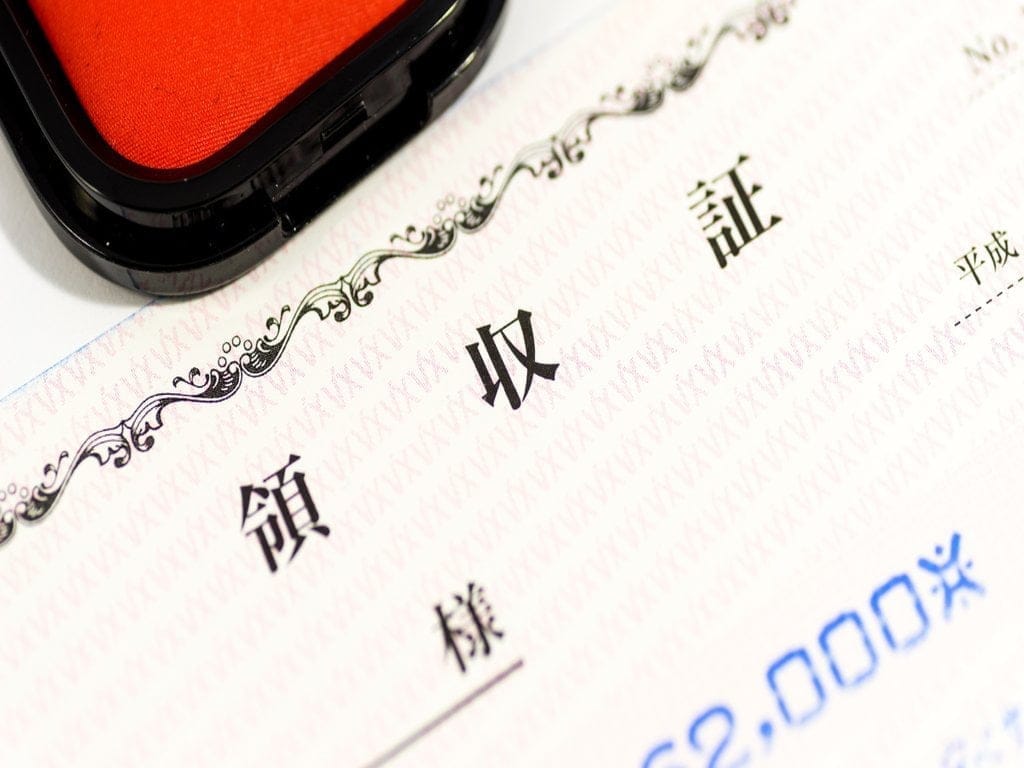
Japanese has four overlapping words for “receipt-like document,” and mixing them up is the single most common source of confusion for foreign business owners. Here’s what each one actually is, and when it’s the right document to ask for.
| Term | What it is | When it’s useful |
| 領収書 (ryōshūsho) | A formal receipt proving payment was received. Often hand-issued or printed on request, it carries the issuer’s name and stamp and can include an itemized breakdown. | Higher-value or business-context payments where you want a document that unambiguously names the payer and purpose, client meals, larger purchases, anything likely to draw audit attention. |
| レシート (reshīto) | A register-printed (POS) receipt. Auto-itemized line by line, and, if the store is invoice-registered, often already contains everything a qualified invoice needs. | Everyday purchases. A レシート is frequently better evidence than a handwritten 領収書 because it itemizes each item and its tax rate automatically. |
| 請求書 (seikyūsho) | An invoice or bill requesting payment, issued before or instead of proof that payment was received. | B2B billing, contractor invoices, monthly retainers, anything billed before or independent of the payment itself. |
| 適格請求書 (tekikaku seikyūsho), “qualified invoice” | Any of the above documents (領収書, レシート, or 請求書) becomes a “qualified invoice” once it carries the six fields the Invoice System requires, issued by a registered business. | Whenever you need to claim consumption tax input credit (仕入税額控除) on the purchase, which in practice means whenever you can get one. |
The practical upshot: a レシート and a 領収書 are not different tiers of legitimacy; either can qualify as a proper qualified invoice, or fail to, depending on what’s printed on it. What matters is the content, not which of the two words is on top of the slip.
Annotated Example: A Standard Receipt (領収書)
Here’s what to look for on a typical 領収書, field by field.
領収書 (Ryōshūsho), Field Guide
What to check on a standard Japanese receipt, field by field.
宛名 (atena), “addressed to”
The payer’s name or company name. A blank or generic 上様 is one of the first things questioned in an audit.
但し書き (tadashigaki), description of payment
What the payment was for. “お品代” is vague and weak evidence; ask for the actual item or service.
金額 (kingaku), amount
The amount paid, often written as 金◯◯円也. Confirm it matches your records.
日付 (hizuke), date
The transaction date. Needed to assign the expense to the correct accounting period.
発行者情報, issuer details
The issuing business’s name, address, and stamp or seal. This is what identifies who you paid.
収入印紙 (shūnyū inshi), revenue stamp
Required on receipts of ¥50,000 or more for certain payment instruments. Its absence doesn’t invalidate your claim.
Annotated Example: A Qualified Invoice (適格請求書)
A qualified invoice can look identical to an ordinary receipt or invoice; what makes it “qualified” is that it carries all six of these fields.
適格請求書 (Tekikaku Seikyūsho), The Six Required Fields
What turns any receipt or invoice into a qualified invoice.
発行事業者の氏名・名称+登録番号
Issuer name plus registration number, formatted T + 13 digits. No registration number, no qualified invoice.
取引年月日, transaction date
The date goods or services were provided. A billing period is acceptable if clearly identified.
取引内容, description of the transaction
A specific description of what was purchased. Reduced-rate items must be marked with ※ or 軽減.
税率ごとの合計対価額+適用税率
Amounts subject to 8% and 10% totaled and shown separately, each with its rate.
税率ごとの消費税額
The actual yen amount of consumption tax for each rate bracket, not just the rate itself.
交付を受ける事業者の氏名・名称
Your business’s name. Can be omitted on a simplified qualified invoice from retail, restaurants, and taxis.
The Qualified Invoice System: What It Means for Your Receipts
Since October 2023, claiming consumption tax input credit (仕入税額控除) on a business purchase generally requires holding a qualified invoice from a registered issuer. A handful of rules soften this in practice, and one of them changed in the FY2026 tax reform.
- Purchases from non-registered businesses aren’t a total loss. A transitional credit still applies, but the FY2026 tax reform extended and softened the phase-out. 80% through September 2026, then 70% (Oct 2026-Sep 2028), 50% (Oct 2028-Sep 2030), 30% (Oct 2030-Sep 2031), and 0% from October 2031, two years longer than the schedule originally announced.
- The 少額特例 (small-value exception). If your business’s base-period taxable sales are ¥100 million or less (or ¥50 million or less in the specified 6-month period), purchases under ¥10,000 (tax included) don’t need a qualified invoice at all; a properly detailed bookkeeping entry is enough. This runs through September 30, 2029, after which it disappears even mid-fiscal-year.
- Public transport and vending machines are separately exempted. Train, bus, and ferry fares under ¥30,000 (not taxi or air travel), and vending-machine, coin-locker, and ATM-fee type purchases under ¥30,000, don’t require invoice retention regardless of the ¥10,000 threshold above.
For most small and early-stage businesses, small daily purchases are forgiving, but anything meaningful (a client dinner, equipment, a contractor invoice) needs an actual qualified invoice on file if you want the consumption tax back on it.
Electronic Bookkeeping Rules for Receipts (電子帳簿保存法)
Japan’s Electronic Bookkeeping Preservation Law splits into three categories, and receipts touch two of them directly.
- Electronic transaction data storage, mandatory since January 2024. If you receive a receipt or invoice electronically (an emailed PDF, a downloaded statement, a receipt from an app), you must keep it as data; printing it out and keeping only the paper copy is no longer sufficient.
- Scanner storage (スキャナ保存), optional, for paper receipts you want to digitize and then discard. If you want to shred the paper original after scanning, the digital copy must meet four requirements. First, input period, meaning it’s scanned within a set window of receiving the document. Second, resolution, meaning 200dpi equivalent or better, with 256 gradations each of red, green, and blue. Third, tamper-evidence, meaning either a timestamp applied within the input period, or storage in a system that keeps an edit/deletion history. Fourth, searchability, meaning it’s retrievable by date, amount, and counterparty. A smartphone photo satisfies the scanning method itself, as long as these four conditions are met.
Two things got easier in recent reforms. The old requirement for a separate person to double-check each scanned document (適正事務処理要件) was abolished in 2022, and businesses with taxable sales of ¥50 million or less get simplified searchability requirements. If you’re not ready to shred paper originals, you can simply keep both; the scanner-storage rules only bind you once you rely on the digital copy alone.
Don’t lose your consumption tax credit
- Qualified invoices reviewed before you file your return.
- Bookkeeping handled end to end, in English.
- Trusted by 100+ companies incorporated across Japan.
How Long You Must Keep Receipts, by Taxpayer Type
| Taxpayer type | Retention period | Notes |
| Corporation | 7 years | Extends to 10 years for any fiscal year where you're carrying forward a loss (欠損金の繰越控除). Runs from the day after the filing deadline for that fiscal year. |
| Individual, Blue Return (青色申告) | 7 years for cash/deposit transaction records and receipts | Drops to 5 years if your business + real estate income in the base two years prior was ¥3 million or less. Other optional books and documents, 5 years. |
| Individual, White Return (白色申告) | Legal books (法定帳簿), 7 years. Receipts and other documents, 5 years | The most common source of confusion. White-return filers often assume everything is 5 years, but the core legal books are 7. |
| Consumption tax, qualified invoices | 7 years | This runs independently of the above and is tied specifically to preserving your right to the input tax credit, regardless of your income tax retention category. |
A practical shortcut many accountants recommend: rather than tracking four different clocks, just keep everything for 10 years. It removes the need to calculate which category a given document falls into, and covers the corporate loss-carryforward case automatically.
Acceptable Digital Storage Practices
Digital storage is fully acceptable in Japan, provided it satisfies the scanner-storage requirements above once you're relying on it in place of the paper original. A workable setup.
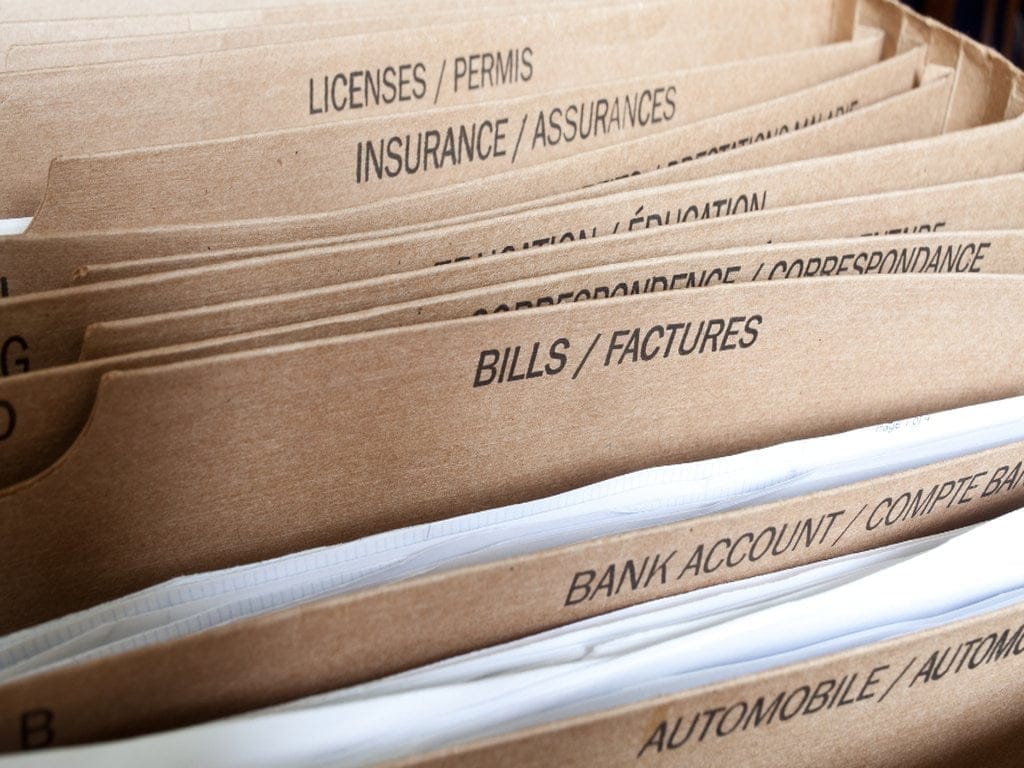
- Consistent file naming. "Month-Day-Year Company - Purpose" (e.g., 10-02-2026 Google Suite Monthly Payment.pdf) keeps files searchable by eye even before you touch accounting software.
- Cloud storage with edit history. Google Drive, Dropbox, or an accounting platform's built-in document store all satisfy the tamper-evidence requirement automatically, provided the platform logs when a file is modified or replaced; check this rather than assuming it.
- A receipt-scanning app (Expensify, Money Forward, freee's receipt capture, or similar) to handle the resolution and timestamp requirements without manual effort.
- Fiscal-year-based archive folders. The retention clock for a given batch of documents is obvious at a glance, which makes it far easier to know what's safe to eventually delete.
Foreign-Currency Receipts
If you're paying in a currency other than yen, the default rule for both corporations and individuals is to convert at the TTM (telegraphic transfer middle rate), the midpoint between a bank's buy and sell rate, as of the transaction date printed on the receipt.
- Continuity-based shortcuts are allowed. With consistent application, you can instead use the prior month-end or week-end rate, the rate on the first day of the month or week, or an average rate over the prior month or week, which is useful if you don't want to look up a fresh rate for every single receipt.
- Individuals get an additional option. Continuously apply TTB to income and TTS to expenses, instead of TTM to both.
- If the rate for the exact transaction date isn't published (a bank holiday, for instance), use the most recent date with a published rate.
- Record the original foreign-currency amount alongside the yen figure in your expense description; useful for your own reconciliation even though the yen figure is what goes into your books.
Credit Card Statements
A card statement is solid evidence that a payment happened, but it plays a narrower role than a receipt.
- For income tax or corporate tax expense deduction. A card statement, on its own, is generally accepted as proof the expense occurred.
- For consumption tax input credit. A statement alone usually isn't enough. It proves you paid something, but not what you bought, its tax rate, or the tax amount; the specifics only the qualified invoice itself carries. Keep both.
- Never create a 出金伝票 (cash disbursement voucher) for a card or bank-transfer payment. The statement already is the objective record; a self-written voucher is only for cash, where no third-party record otherwise exists.
Missing-Receipt Procedures
Work through these in order.
- Request a reissue from the vendor. This is always the strongest option when it's available.
- Use alternate substantiation. A credit card statement, a bank transfer record, an online order confirmation email or purchase-history page, or an invoice from the vendor can all stand in, as long as the date, amount, and counterparty are identifiable.
- As a last resort, and for cash payments only, write a 出金伝票 (cash disbursement voucher). Record the date, payee, amount, and business purpose, and attach whatever corroborating evidence you can, such as a meeting invite, an event flyer, anything that supports the transaction actually happened. Treat this as a last resort. It's your own handwritten note, and it draws the closest scrutiny in a tax audit.
The consumption tax catch
All of the above can usually support your income tax or corporate tax expense deduction. The consumption tax input credit is a separate, stricter question. Without an actual qualified invoice, you generally lose that credit unless the purchase falls under one of the specific exceptions covered above (public transit under ¥30,000, vending-machine-type purchases under ¥30,000, or the ¥10,000 少額特例 while it lasts through September 2029).
Missing a receipt? We can help
- Substantiation reviewed before an audit ever starts.
- Documentation habits built to survive scrutiny.
- 60+ visas granted for founders like you.
A Practical Month-End Filing Workflow
A repeatable rhythm beats a pile of good intentions. Here's a workflow that scales from a solo founder to a small team.
As Each Receipt Comes In
- Photograph or scan it immediately; don't let it sit in a wallet or bag.
- Note the business purpose on the spot, especially for meals and entertainment, noting who attended and why. This is the detail people forget within a week and can never reconstruct later.
- File it into that month's folder using your naming convention, before moving on.
Weekly
- Match each receipt to its expense-report line item while the transaction is still fresh in memory.
- Flag anything missing and chase the vendor for a reissue now; waiting until month-end makes this much harder.
Month-End
- Reconcile your receipt folder against the credit card and bank statements for the month; every card charge should have a matching receipt, and vice versa.
- Confirm every purchase of ¥10,000 or more has a valid qualified invoice on file (below that threshold, the 少額特例 may cover you; see above).
- Resolve any remaining gaps through the missing-receipt procedure before they turn into a backlog.
Filing Taxonomy
Rather than sorting purely by expense category, build folders around the question a filing actually needs to answer later. A structure that works well.
- By fiscal year first, so retention-period tracking is automatic.
- By invoice status within the year, whether that's a qualified invoice on file, covered by an exception (少額特例, transit, vending machine), or still missing and pending follow-up. This is the single most useful axis, since it's the one the consumption tax filing actually cares about.
- By expense category (travel, meals & entertainment, office supplies, software, marketing) within each of the above, matching your expense report or accounting software however already categorizes things.
Why Professional Support Helps
Receipt management sits at the intersection of tax compliance, bookkeeping, and day-to-day operations, and getting it wrong compounds quietly until an audit or a visa renewal brings it to the surface. Professional accounting and back-office support help in a few concrete ways.
- Expertise in local regulations. Professional accountants track changes like the ones in this guide as they happen, rather than you finding out at filing time.
- Accurate financial reporting. Bookkeeping, financial statements, and tax filings stay precise and current.
- Time and cost efficiency. Outsourcing this work frees you to focus on the business itself.
- Advanced tools. Professional providers already run the scanning and reconciliation software described above.
- Scalability. Support that grows with your business rather than needing to be rebuilt at each stage.
Let us handle your bookkeeping
- Monthly reconciliation handled so nothing slips.
- Compliance tracked as rules change each year.
- Trusted by 100+ companies incorporated across Japan.
SmartStart Japan's Services
SmartStart Japan offers a comprehensive suite of services designed to support businesses operating in Japan.
- Accounting Services. Bookkeeping, financial reporting, and tax filing, with an eye toward Japanese regulatory compliance.
- Back Office Support. Payroll management, HR services, and administrative assistance.
- Business Consulting. Market entry strategy, business planning, and regulatory compliance advice.
- Virtual Office Services. A business address, mail handling, and phone answering for businesses needing a local presence.
- Customized Solutions. Services tailored to your specific business needs.
Related Reading
This guide connects most directly to a few other SmartStart Japan resources.
- Our accounting and bookkeeping services guide, for the broader compliance picture beyond receipts alone.
- Our guide to Japan's tax identification number system, for how registration numbers (including the T-numbers on qualified invoices) actually work.
- Our year-end tax checklist, for how receipt filing fits into the broader year-end close.
Final Thoughts
Effective receipt management is less about any single rule and more about a repeatable habit. Scan it immediately, note why it happened, match it to your expenses weekly, and reconcile monthly. Get that rhythm right and the qualified invoice rules, retention periods, and missing-receipt procedures above become occasional reference material rather than something you're relearning under audit pressure.
Ready to simplify your bookkeeping?
SmartStart Japan handles receipts, filings, and compliance so you can focus on your business.